
The Power of Diet: Managing Diabetes Beyond Medication 💊🥗
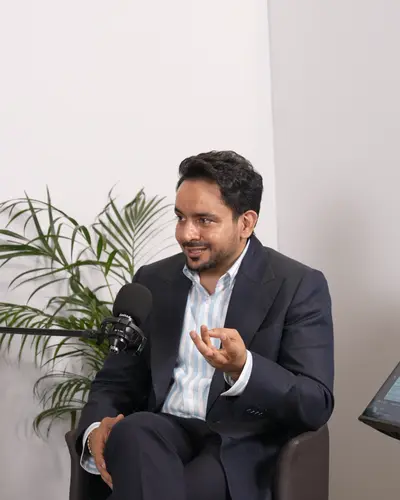
By Amrit Deol — Certified Nutritionist & Wellness Expert
"Beta, just take your metformin and eat whatever you want — it's the medicine that matters."
Sound familiar?
If you grew up in a South Asian household, you've probably heard some version of this. Maybe it was Nani reassuring Nana after his diagnosis, or maybe it's what the doctor told your parents when they couldn't quite explain how to navigate a roti-and-dal household while managing blood sugar.
The truth is — medication is important, but it is rarely the whole story. As a North Indian nutritionist who has worked with dozens of families across the diaspora, I can tell you that what's on your plate every single day is often the most powerful tool you have for managing Type 2 diabetes. And the beautiful thing? We don't have to abandon our food culture to do it.
✦ Why South Asians Are at Higher Risk
Let's have an honest conversation first. South Asians have one of the highest rates of Type 2 diabetes in the world — and we develop it at lower body weights and younger ages than most Western populations. This isn't a coincidence or bad luck. It comes down to a mix of genetic predisposition, dietary patterns, and the lifestyle shifts that often come with immigration.
Our bodies are more insulin-resistant at baseline. Meaning: the same diet that might be fine for a white European coworker can send our blood sugar on a rollercoaster. Add in the stress of the diaspora experience — building a new life, working multiple jobs, maintaining family back home — and it's a recipe for metabolic dysfunction.
The Diaspora Reality: Many of us grew up in households where food was love — where refusing seconds felt like rejecting someone's affection, where every celebration centred on mithai and biryani. Changing how we eat isn't just about nutrition. It's about navigating family, identity, and belonging. That's why diet advice needs to meet us where we actually live.
✦ What Diabetes Actually Means for Your Diet
Type 2 diabetes is fundamentally a condition of blood sugar dysregulation. Your body either doesn't produce enough insulin, or it doesn't use it effectively. Every time you eat carbohydrates — yes, that means roti, rice, and paratha — they break down into glucose and enter your bloodstream.
The goal is not to eliminate carbohydrates entirely (that would be culturally unrealistic and nutritionally unnecessary). The goal is to manage the quality, quantity, and timing of the carbohydrates you eat so that your blood sugar rises and falls gradually — like a gentle hill — rather than spiking like a mountain peak.
✦ Indian Foods That Are Secretly Working Against You
Before we talk about what to eat more of, let's address what's quietly causing harm — not because our food is bad, but because of how and how much we eat it.
🍚 White Basmati Rice
Beloved but high glycemic. Causes rapid blood sugar spikes, especially in large portions. Eat in smaller portions alongside dal or sabzi to slow absorption.
🫓 Maida-Based Breads
Naan, white bread, puri — refined flour hits the bloodstream fast. Even our achaar sandwiches on white bread deserve a second look.
🍬 Mithai & Sweet Chai
Gulab jamun, jalebi, rasgulla — concentrated sugar and refined carbs in every bite. Two cups of chai with two teaspoons of sugar per day adds up faster than you think.
🥤 Packaged Juices & Lassi
Even "natural" mango juice can have as much sugar as a can of soda. Store-bought lassi and flavoured drinks are often loaded with added sugars.
✦ Our Kitchen is Full of Medicine — We Just Forgot 🌿
Here is the part I love talking about. Our traditional Indian pantry is arguably one of the most diabetes-friendly in the world — if we use it properly. Our dadi and nani knew things about food and healing that modern nutrition science is only now catching up to.
🌿 Methi (Fenugreek)
Studies show it improves insulin sensitivity. Soak seeds overnight and eat them in the morning on an empty stomach, or cook methi saag regularly. One of the most underused tools in our kitchen.
Benefits: Insulin Sensitivity · Blood Sugar Control · Anti-Inflammatory
🫘 Dal & Legumes
Chana, rajma, masoor, moong — high protein, high fibre, low glycemic. Hands-down the most underrated diabetes superfood in our cuisine. Eat dal at least once a day, every day.
Benefits: High Protein · Low GI · Gut Health
🧅 Karela (Bitter Gourd)
Yes, the one everyone hates. Karela contains compounds that mimic insulin. Even 50ml of karela juice daily has shown meaningful blood sugar benefits in studies. Make peace with it.
Benefits: Blood Sugar · Insulin Mimetic · Liver Health
🌰 Whole Atta Roti
Made with stone-ground flour, chapatti is actually a great carbohydrate source when eaten in the right quantity. Pair with dal or sabzi and eat 2 instead of 4. The fibre matters.
Benefits: Fibre · Slower Digestion · Sustainable Energy
🫚 Ghee (in moderation)
A small amount of ghee on roti actually slows carbohydrate absorption. It's the excessive quantity that's the problem — not the ghee itself. Don't fear it; just don't drown your food in it.
Benefits: Slows Carb Absorption · Fat-Soluble Nutrients · Gut Lining
🌶️ Haldi, Jeera & Dalchini
Turmeric's curcumin, cumin, and cinnamon all have anti-inflammatory, blood-sugar-stabilising properties. Our masalas are doing real work — use them generously in every meal.
Benefits: Anti-Inflammatory · Blood Sugar · Antioxidant
✦ Busting the Myths We Were Raised On 🚫
❌ Myth: "Diabetes sirf boodhe logon ko hota hai." (Diabetes only happens to old people.)
✅ Truth: South Asians are developing Type 2 diabetes in their 30s and 40s at alarming rates. Genetics and lifestyle make us vulnerable decades earlier than Western populations. Early diet intervention matters enormously.
❌ Myth: "Brown rice is basically the same as white rice."
✅ Truth: Brown rice has significantly more fibre, which slows digestion and leads to a gentler blood sugar rise. For diabetics, this difference is meaningful — especially if rice is a daily staple.
❌ Myth: "I just eat roti instead of rice, so I'm fine."
✅ Truth: Six rotis a day can spike blood sugar just as much as a large portion of rice. It's not just what carb you choose — it's the total carbohydrate load that matters.
❌ Myth: "Once you're on insulin, your diet doesn't matter anymore."
✅ Truth: Insulin helps your body use glucose, but it doesn't make poor dietary choices harmless. Many people on insulin can reduce their dosage significantly through sustained dietary changes.
✦ A Day of Eating for an Indian Diabetic 🍽️
This isn't a prescriptive diet plan — it's a glimpse of how cultural food can coexist beautifully with blood sugar management.
☀️ Morning — Start with intention
Begin with a glass of warm water and soaked methi seeds. Breakfast could be a bowl of plain dahi with a small handful of walnuts, or two besan cheela (chickpea flour crepes) with green chutney. Avoid the paratha-with-achaar-and-chai combo first thing — it's a blood sugar spike waiting to happen on an empty stomach.
🌞 Lunch — The plate method, desi style
Fill half your plate with sabzi and salad, a quarter with dal, and a quarter with 1–2 rotis or a small portion of brown rice. This is not deprivation — this is a beautifully balanced thali. Add a small bowl of dahi for probiotics and protein.
🫖 Evening Chai — Rethink, don't remove
Chai is sacred. I will never tell you to give it up. But try cutting to one teaspoon of sugar instead of two, switching to jaggery sparingly, or trying unsweetened kahwa (Kashmiri green tea with spices) a few times a week. Pair chai with a small handful of almonds — never with biscuits or namkeen alone.
🌙 Dinner — Light and early
Dinner should be the lightest meal of the day and ideally eaten by 7:30–8pm. A bowl of moong dal soup, one roti, and a light sabzi works beautifully. Eating late and then going to bed is one of the biggest blood sugar saboteurs I see with clients.
💡 Amma's Secret Weapon: A 10–15 minute walk after every meal — even around the living room — can reduce post-meal blood sugar spikes by up to 30%. This is the one habit I push harder than any food change. Our grandparents walked everywhere; we drive. Our bodies haven't forgotten what movement can do.
✦ Navigating Family & Food Culture 🏠
This is the part no one talks about enough. Managing diabetes in a South Asian family means navigating a mother who takes it personally if you don't eat her kheer. It means Diwali tables groaning with mithai. It means weddings where the question is never "are you hungry?" but "second helping or third?"
Be honest with your family, and invite them in. When they understand that your choices are about your health and longevity — not a rejection of their love or cooking — most families come around. They might even start making small adjustments for everyone.
At celebrations, eat what is meaningful and skip what is just habit. Have one piece of mithai you truly love instead of four that you eat because they're there. Fill up on salad and dal before the rice and dessert. And please — stop feeling guilty about managing your own health.
✦ The Bottom Line
Medication is a tool. Diet is a lifestyle. The research is unambiguous: sustained dietary changes can reduce HbA1c levels, lower medication dependency, and in some cases of early-stage Type 2 diabetes, contribute to full remission.
Our food culture is not the enemy. A relationship with food that is unconscious, disconnected, and driven by habit — that's where the risk lives. When we bring awareness, portion intelligence, and a few smart swaps to the table, our cuisine becomes one of the most powerful healing traditions in the world.
You don't need to eat like someone from a different culture to manage diabetes. You need to eat like an informed version of who you already are. 🌿
Ready to build your personalised diabetes meal plan? Book a 1:1 consultation with Amrit Deol — nutrition advice rooted in your cultural foods, your family situation, and your real life.
Disclaimer: This blog is for informational purposes only and does not constitute medical advice. Always consult your physician or a qualified nutritionist before making significant changes to your diet or medication regimen.
© 2026 Amrit Deol — Certified Nutritionist & Wellness Expert